Discover Silbo: your window into La Gomera’s heritage
Dive into the fascinating world of Gomero whistling through this carefully curated selection of resources. Here you will find essential reading, teaching materials, scientific studies and useful links that played a key role in my final-year dissertation, so that you too can gain an in-depth understanding of this gem of intangible cultural heritage.

The academic legacy: pioneering research
Begin your journey with the works that have laid the foundations for the study of Silbo Gomero. From Trujillo’s pioneering analyses to the theoretical frameworks on whistled languages, these texts are essential for understanding their structure and their place in global linguistics.
Trujillo, R. (1978). The Silbo Gomero: A Linguistic Analysis. Editorial Interinsular Canaria.
This work is a pioneering study of the Silbo Gomero and a key reference in its linguistic analysis. The author describes its phonological system and explains how Spanish phonemes are transformed into whistled signals. Using a descriptive methodology, Trujillo sistematices for the first time the acoustic and structural features of this mode of communication. Its seminal nature makes this work a theoretical cornerstone for subsequent research into whistled languages and a key underpinning of the theoretical framework of this study.
Trujillo, R. (2008/2011). The Silbo Gomero: A New Phonological Study (bilingual ed.). Academia Canaria de la Lengua.
In this work, Trujillo revises and expands his 1978 study, incorporating new empirical data and an updated theoretical framework. The author delves deeper into the phonological description of the Silbo Gomero and refines the analysis of its acoustic mechanisms. The bilingual edition broadens its international academic reach. This resource is particularly relevant for comparing the evolution of research on the whistle and for observing how methodological approaches have been refined over time.
Busnel, R.-G., & Classe, A. (1976). Whistled languages. Springer.
This book provides a general theoretical framework for whistled languages worldwide. The authors compare different systems of whistled communication from a linguistic and anthropological perspective. The book is particularly useful for contextualising the Silbo Gomero within the international landscape, allowing parallels and differences to be drawn with other whistled languages. It constitutes a classic reference for comparative studies and provides a solid basis for demonstrating the universality of this form of human communication.
Meyer, J. (2015). Whistled languages: A worldwide inquiry on human whistled speech. Springer.
Meyer presents a comprehensive study of whistled languages in various cultural contexts around the world. The work combines linguistic analysis, fieldwork and methodological reflections. Its chapters are particularly valuable for understanding the acoustic and sociocultural mechanisms of whistling. This resource broadens the scope of the work beyond the Canary Islands and provides a basis for typological comparisons, thereby enriching the theoretical approach of the research.
The future of whistling: teaching and preservation
Find out about the methods and materials that ensure the survival of the Silbo Gomero. From school guides to video tutorials, these resources are key to teaching it and passing it on to new generations.
Gobierno de Canarias. (n.d.). El silbo gomero. Teaching materials.
Official guide to teaching Gomero whistling in schools. It includes learning objectives, content, assessment criteria and methodological suggestions. This resource is essential for analysing the institutional transmission of whistling and its incorporation into the school curriculum. It provides a practical basis for understanding the processes of didactisation and pedagogical adaptation of this linguistic form. See more here.
Gobierno de Canarias. (2023). Video tutorials for teaching Silbo Gomero in the classroom.
An audiovisual resource designed for teachers and pupils for the practical teaching of Gomero whistling. It provides an insight into current teaching strategies and active methodologies used in the classroom. This resource is particularly useful for illustrating real-life examples of educational transmission and for analysing the role of digital resources in the preservation of linguistic heritage. Visit their website .
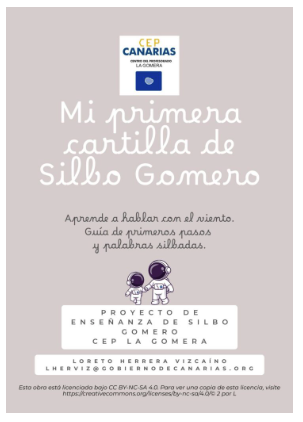
C.PROF.. (2025). My First Silbo Gomero Handbook.
Recent introductory material designed for primary education. It presents Silbo in a way that is tailored to a young audience, enabling an analysis of processes of simplification and educational adaptation. This work is significant as an example of pedagogical adaptation and for reflecting on the inclusive and early teaching of linguistic heritage. Read more here.

The science of whistling: neuroscience and perception
Discover the research that demonstrates the linguistic nature of the Silbo Gomero from a neuroscientific perspective. A study that reveals how the brain processes this unique language.
Manuel Carreiras, López, J., Rivero, F., & Corina, D. (2005). Linguistic perception: Neural processing of a whistled language. Nature, 433(7021), 31–32.
A landmark neuroscientific study using functional magnetic resonance imaging with Silbo Gomero whistlers. It demonstrates that the brain processes the Gomero whistle in linguistic areas, confirming its status as a linguistic system. This research is key to scientifically substantiating the ‘linguistic nature’ of the whistle and provides a solid empirical basis for the theoretical framework. See more.
University of Washington News. (2005). Shepherds whistle while they work…
An accessible overview of the study by Carreiras. It presents the findings in an accessible and contextualised manner. It serves as a useful complement to the academic source, providing an accessible explanation that helps readers understand the neuroscientific findings.


In-depth research: articles and theses
For those seeking a more detailed analysis, this section brings together academic works that offer comprehensive reviews and innovative approaches to the Silbo Gomero Gomero.
van Neerven, G. M. C. (2012). El silbo gomero: A language or a communication system? Bachelor’s thesis, Utrecht University.
A comprehensive academic study examining the phonetic, syntactic and semantic aspects of the Silbo Gomero language. It is particularly valuable for its critical approach and for being written in Spanish. It provides a wide-ranging and up-to-date review of the literature, which enriches the current state of research in this field.
Notes on Silbo Gomero. (n.d.). Autonomous University of Madrid.
An academic paper summarising the main studies on the Silbo Gomero, with particular reference to Trujillo. This resource is useful as supporting material and a summary to provide context for the topic and reinforce the theoretical review.
Lucas López, A. (2021). Silbo Gomero and disability. Academic paper, University of La Laguna.
This study focuses on the inclusive teaching of the Silbo Gomero from the perspective of disability. It offers an innovative approach by analysing accessibility and pedagogical adaptation. This approach broadens the educational and social framework of the work, incorporating the dimension of inclusion.

Digital presence: webgraphy and useful links
Explore the online presence of the Silbo Gomero through institutional and educational websites. Access official information and resources to continue learning about its history, conservation and promotion.
UNESCO. (2009). Silbo Gomero, the whistled language of the island of La Gomera (Canary Islands).
UNESCO’s official webpage dedicated to Gomero whistling as Intangible Cultural Heritage of Humanity. It provides detailed information on its history, social functions, transmission process and safeguarding measures. This resource is essential for establishing the institutional and heritage framework of the work, as well as for contextualising the international recognition of Gomero whistling.
Gobierno de Canarias. (n.d). Silbo gomero. Wiki Medusa.
An institutional information resource providing a clear overview of the origins, linguistic characteristics and cultural significance of the Gomero whistle. This resource is useful both as a general reference and as a teaching aid, as it summarises relevant academic information in an accessible manner. See more.
La Gomera Travel. (n.d). Silbo Gomero.
The official tourism website that showcases the Silbo Gomero from a cultural and heritage perspective. It provides information on public demonstrations, the history of the whistle and its significance to local identity. This resource is useful for analysing the socio-cultural and tourism aspects of the whistle, as well as its contemporary relevance. Visit their website here.
Ministerio de Cultura y Deporte. (n.d). Silbo gomero.
An official document recognising the Silbo Gomero as part of the country’s intangible cultural heritage. It is central to the legal framework governing this work, as it complements UNESCO’s recognition with state protection. See more.
Gobierno de Canarias. (n.d.). Whistled language.
An educational section dedicated to the Silbo Gomero. It provides resources, explanations and teaching materials. This resource enables an analysis of the formalisation of its teaching and its inclusion in official educational programmes. Read more here.
Gobierno de Canarias. (n.d.). Intangible cultural heritage of humanity.
An institutional webpage explaining the process of designating the Silbo Gomero as intangible cultural heritage. It is useful for reinforcing the legal and heritage aspects of the work, providing official information on its protection. Read more.
Gobierno de Canarias. (n.d.). Publications.
An institutional archive of documents and materials relating to the Silbo Gomero. This resource serves as a useful gateway to supplementary literature and official documents. See more.
Gobierno de Canarias. (n.d.). Studies.
A section compiling research and studies on the Silbo Gomero. It provides a valuable body of literature for a review of the literature and an overview of the current state of research. See more here.
Silbo in action: audiovisual resources
Observen y escuchen el silbo gomero en su contexto real. Esta sección les ofrece reportajes y documentales que ilustran su práctica, transmisión y la vida de los silbadores.
CÁTEDRA UNESCO FORUM UNIVERSIDAD Y PATRIMONIO. (2021, May 20). El silbo gomero [Video]. YouTube.
An informative video report on the Silbo Gomero. It showcases real-life uses, personal accounts and practical demonstrations. This resource is useful for illustrating the socio-cultural context and supplementing theoretical analysis with visual examples. Watch it here.
The Silbo in action: institutional and educational resources
Explore digital spaces dedicated to promoting, teaching and preserving the Gomero whistle. These platforms offer an insight into its role in the community, its educational value and its significance for local identity today.
Asociación Cultural Silbo Gomero. (n.d.). Asociación Cultural Silbo Gomero.
Official website of the "Silbo Gomero Cultural Association", an organisation dedicated to the preservation, promotion and dissemination of this linguistic form. It provides information on educational activities, cultural projects, events and awareness-raising initiatives on the island of La Gomera. This resource is particularly useful for understanding the community aspect of Silbo, as well as contemporary efforts by civil society to revitalise and pass it on across generations. Visit their website here.


Legal framework: protection and regulations
Find out about the regulatory framework that protects and promotes Silbo Gomero. These official documents are essential for understanding the safeguarding measures and their legal recognition.
Boletín Oficial de Canarias. (2019). Resolution on Silbo Gomero.
A legal document regulating aspects of the protection and promotion of the Silbo Gomero. It is fundamental to the legal framework of the work, as it provides regulatory backing for its teaching and preservation. See more here.