The Silbo Gomero: the voice that echoes through the ravines
The Silbo Gomero is not merely a whistle used for communicating over long distances. It is an astonishing demonstration of the human capacity to adapt language to any need and environment. It originated on La Gomera as a means of bridging the distances across its valleys and ravines, and today it is recognised by UNESCO as Intangible Cultural Heritage. It is neither a simplified code nor empty folklore; it is human adaptability in its purest form, shaped by the landscape and sustained by the identity of a community.
A 'language' in the air: flexibility and the brain
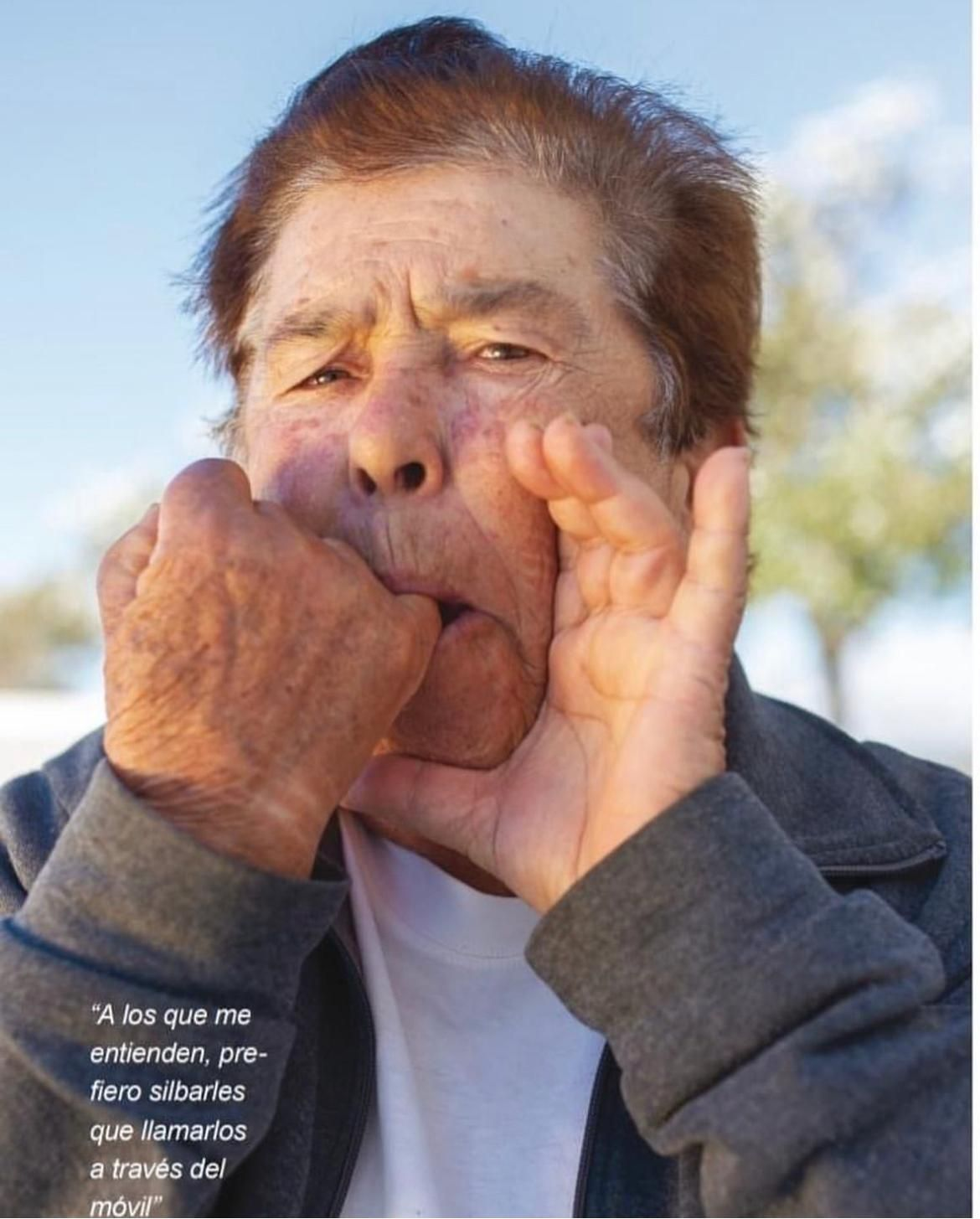
The Silbo Gomero activates the same areas of the brain as spoken language, demonstrating its linguistic complexity.
As it is not a language in the strict sense, it has no morphology or syntax of its own; the whistle retains the basic structure of Spanish: sentences, word order and much of the meaning continue to function in the same way as in the spoken language. It is a sound system that reproduces the phonological system of a natural language.
The whistle is a living example of how communication is shaped by the landscape and necessity.
('To those who understand me, I'd rather whistle at them than call them to their phone')
Photograph courtesy of the Asociación Cultural Silbo Gomero.
Respect for a living heritage
Beyond the curiosities of the Silbo Gomero, this communication system possesses some very interesting linguistic properties. Although at first glance it may seem like a completely different language, in reality the whistle adapts spoken Spanish into a language based on whistles. To do this, it transforms the sounds of words into changes in pitch, duration and intensity, allowing messages to be heard over great distances without losing their main meaning.
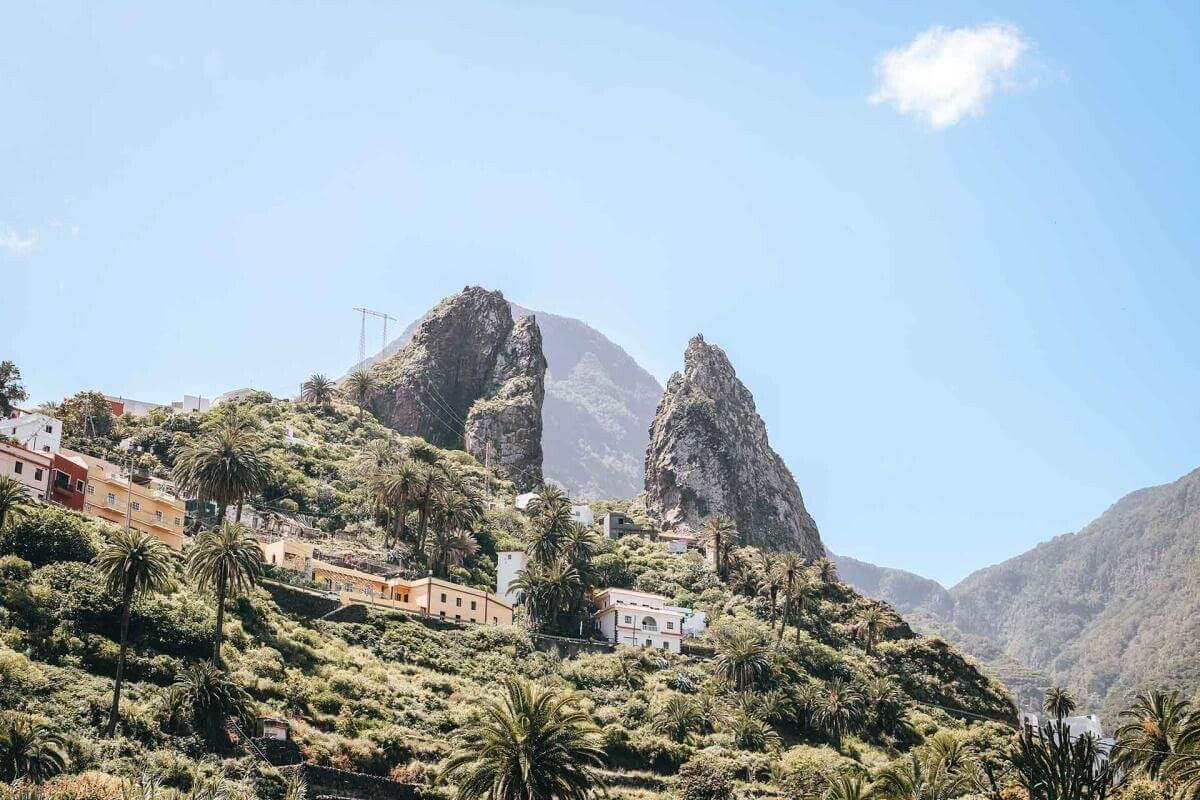
This adaptation demonstrates the enormous capacity of human language to adapt to its environment. On an island marked by ravines and mountains such as La Gomera, the whistle emerged as a practical solution for communicating between different parts of the island. Although it uses fewer sounds than spoken Spanish, the whistlers are able to understand one another thanks to context, experience and a shared knowledge of the language.
Through this tradition, we can reflect on linguistic diversity and understand that the Silbo Gomero has a history, a structure and undeniable cultural and cognitive value, making it a unique system within the Spanish language and a testament to human communicative creativity.
Photograph courtesy of the Tourism Board of the Cabildo of La Gomera
How Does Silbo Gomero Work?
Although it may seem like a simple whistle, Silbo Gomero has a highly organized linguistic system. It works by transforming the sounds of Spanish into different changes in pitch, intensity, and interruptions within the whistle.
Unlike spoken language, where we use the tongue, lips, or throat to produce sounds, Silbo mainly transmits information through acoustic variations. Thanks to this, a small number of whistled sounds can represent many different words and messages.
The Silbo system is organized around several basic oppositions. The first distinction is between vowels and consonants. Vowels are usually heard as more continuous and stable sounds, while consonants are produced through rapid changes or brief interruptions in the whistle.
| Contrast | Definition | Types in Spahish | Phonemas |
|---|---|---|---|
| Vowel vs. consonant | Vowel: produced without obstruction, syllabic nucleus. Consonant: produced with obstruction or constriction | Vowels (front/back, open/close) Consonants (stops, fricatives, affricates, nasals, laterals, rhotics) | Vowels: /a, e, i, o, u/ Consonants: /p, b, t, d, k, g, f, θ, s, x, ʝ, t͡ʃ, m, n, ɲ, l, ʎ, ɾ, r/ |
| Acute vs. grave | Acute: higher frequency (front/coronal sounds). Grave: lower frequency (back/dorsal sounds). | Acute (front vowels, coronal/palatal consonants) Grave (back vowels, bilabial/velar consonants) | Acute: /i, e, t, d, s, θ, n, ɲ, l, ʎ, ɾ, r, t͡ʃ, ʝ/ Grave: /u, o, a, p, b, k, g, f, x, m/ |
| Continuous vs. interrupted | Continuous: sustained airflow. Interrupted: airflow is stopped or briefly blocked | Continuous (fricatives, nasals, laterals, trill, vowels) Interrupted (stops, affricates, tap) | Continuous: /a, e, i, o, u, f, θ, s, x, ʝ, m, n, ɲ, l, ʎ, r/ Interrupted: /p, b, t, d, k, g, t͡ʃ, ɾ/ |
In addition, sounds can also be classified as acute or grave. Acute sounds are produced with higher frequencies, while grave sounds use lower tones. For example, the vowels /i/ and /e/ are generally represented with higher-pitched whistles, whereas /a/, /o/, and /u/ are associated with lower tones.
Another important characteristic is the difference between continuous and interrupted sounds. Some sounds maintain a constant airflow, while others require brief pauses or cuts within the whistle. These variations make it possible to distinguish different words and meanings.
Thanks to this organization, Silbo Gomero adapts the phonological structure of Spanish into a much simpler acoustic code. Although several Spanish sounds are grouped into the same whistled category, people who know the system are able to understand messages by relying on both context and their knowledge of the language.
This demonstrates how flexible human language can be. Even when the number of available sounds is greatly reduced, Silbo is still capable of transmitting complex information and maintaining complete conversations over long distances.
Listening to Silbo Gomero
Although many people know Silbo Gomero through videos or tourist demonstrations, listening to it closely allows a better understanding of its true richness. Each whistle conveys information, intention, and emotion, making it a unique form of communication in the world.
In this section, you will find different audio examples that will help you get closer to this living tradition. Through greetings, calls, and short everyday expressions, you will be able to appreciate how Silbo can adapt to spoken language and maintain complete conversations.
We invite you to listen carefully to these examples, trying to identify the changes in pitch, rhythm, and duration of the whistles. Beyond its characteristic sound, each audio represents centuries of history, cultural transmission, and connection between generations.
We hope these examples help you discover Silbo Gomero from a closer and more human perspective, understanding why it continues to be one of the greatest cultural symbols of the Canary Islands.

Photograph courtesy of the Tourism Board of the Cabildo of La Gomera
"Esto es el silbo gomero." This is the Silbo Gomero
"Islas Canarias." Canary Islands
"Hola, ¿qué tal?" Hello, how are you?
Can Other Languages Be Whistled?
One of the main questions of this project was to discover whether Silbo Gomero could be adapted to languages other than Spanish. For this reason, we decided to experiment with English, analysing whether it was possible to transmit words and sounds from this language through whistling.
The results showed that it is indeed possible to whistle in English. Although every language has different phonetic characteristics, Silbo can adapt and reproduce different linguistic sounds while maintaining its communicative function.
Below, you will find some examples of words and expressions whistled in English alongside their equivalents in Spanish. In this way, you will be able to compare how the same idea can be transmitted through Silbo in different languages.

Photograph courtesy of the Tourism Board of the Cabildo of La Gomera
This is the Silbo Gomero.
Canary Islands.
Hello, how are you?

Your role in its preservation
Having explored the depth of the Gomero whistle, we would like you to appreciate this living heritage, not merely as a tourist attraction. We encourage you to view linguistic diversity in a new light, recognising that every language reflects a unique history and identity.
If you have the opportunity to visit the island, take an interest in its cultural and educational aspects; La Gomera Island Council has made an institutional and community effort that has enabled its preservation following its recognition by UNESCO in 2009.
Associations such as the ‘Asociación Cultural Silbo Gomero’ will be delighted to provide you with information and explain everything you need to know about the Silbo Gomero.
Photograph courtesy of the Tourism Board of the Cabildo of La Gomera